You’ve got a product ready to sell, a brand you’re proud of, and three agency proposals that all promise to build the perfect Shopify store. A Shopify web development agency can make or break your launch, since the platform choice matters far less than who actually builds and maintains the store behind it. This guide breaks down what separates a strong agency from one that will leave you stuck with a slow, hard-to-update site, and gives you a clear framework for comparing proposals instead of just picking the cheapest one.
By the end, you’ll know exactly what questions to ask and what red flags to watch for before you sign a contract.
Why the Right Shopify Web Development Agency Matters
Shopify is flexible enough to support a simple five-product store or a complex catalog with custom checkout logic, subscriptions, and multiple sales channels. That flexibility is also what makes agency choice so important.
A team that only knows how to install a free theme and swap in your logo will struggle the moment you need something custom, like a unique product filtering system or a checkout flow tailored to your business. A team with real development depth can build exactly what your store needs, then maintain it as your catalog and traffic grow.
What a Strong Shopify Web Development Agency Actually Delivers
Beyond a store that looks good, a capable agency delivers a foundation that holds up under real traffic and ongoing changes.
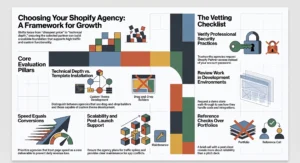
Look for evidence of custom theme work, not just template installations. Ask how they approach page speed, since a slow store quietly costs conversions every single day it stays online. And ask how they handle app integrations, because a poorly vetted app can conflict with your theme code and break your site without warning.
Key Factors to Compare Between Agencies
Use these factors to evaluate proposals side by side instead of comparing price alone.
- Technical depth. Ask how comfortable the team is working directly with Shopify’s development tools and APIs, referencing resources like Shopify development capabilities documentation rather than relying only on drag-and-drop builders.
- Design and UX thinking. A good store balances brand identity with a checkout flow that doesn’t lose customers halfway through.
- Communication style. Notice whether the agency explains decisions in plain language or buries you in jargon during the first call.
- Post-launch support. Confirm what happens after launch, including who handles updates, bug fixes, and app conflicts.
- Portfolio relevance. A store built for a fashion brand doesn’t always translate to a subscription-based service business. Ask for examples close to your industry.
- Scalability planning. Ask how the agency builds stores to handle traffic spikes or catalog growth, rather than optimizing only for how the store looks on launch day.
None of these factors matter equally for every business. A small single-product store has different priorities than a growing catalog with multiple collections, so weigh each factor against your actual plans for the next twelve months.
How to Vet Technical Skill Before You Commit
Most business owners can’t read code, but you can still confirm an agency has real technical ability before signing anything.
- Ask for a development store demo. A serious agency should be comfortable showing work inside a Shopify development/testing environment before anything goes live on your actual storefront.
- Check how they handle access. A trustworthy team will request proper Shopify Partner/developer access rather than asking for your full account password, which is a basic sign they follow standard security practices.
- Ask about their testing process. Find out how changes get tested before launch, especially for checkout and payment flows.
- Request references, not just a portfolio. A quick call with a past client tells you more about communication and reliability than any case study.
These four checks take less than an hour combined, but they reveal far more than a polished pitch deck ever will. Agencies confident in their process rarely hesitate when asked to walk through any of them.
Common Mistakes When Choosing a Shopify Agency
A handful of avoidable mistakes account for most of the frustration business owners run into.
- Choosing based on the lowest quote without understanding what’s excluded
- Assuming general web design experience automatically translates to Shopify expertise
- Skipping reference checks because they feel like extra effort
- Not confirming who owns the theme code and store setup after the project ends
- Ignoring post-launch support until something breaks and there’s no clear plan
Most of these come down to rushing the decision. A short, direct conversation about each point before signing usually prevents all five.
Custom Development vs. Template-Based Builds
Not every store needs a fully custom build, and a good shopify web development agency will tell you that honestly instead of upselling features you don’t need yet.
A template-based store works well for straightforward catalogs without unusual requirements, and it typically costs less upfront. A custom build makes more sense once you need specific functionality templates can’t handle, or once your brand needs a storefront that doesn’t look like dozens of other stores using the same theme. If you’re deciding between the two, our guide to Shopify store development walks through how to figure out which approach fits your business, and our Shopify Custom Theme Development resource covers what a fully custom build actually involves from a technical standpoint.
If you’re comparing Shopify against other platforms for a smaller operation, it’s worth reading our breakdown of web design service for small business costs, which covers pricing considerations that apply across platforms, not just Shopify.
Setting a Realistic Budget Before You Request Proposals
Walking into agency calls without a budget range makes it harder to get comparable quotes. Before reaching out, decide on a rough range you’re comfortable spending, and separate your must-have features from features you’d like eventually.
This doesn’t mean sharing your exact number upfront if you’d rather not, but having clarity internally helps you spot when a proposal is padded with extras you don’t need or missing something essential you assumed was included. Agencies also tend to give more accurate, useful proposals when they understand the general scope you’re working within from the start.
Frequently Asked Questions
How much does it cost to hire a Shopify development team?
Costs typically range from $2,000 for a template-based store to $25,000 or more for a fully custom build. The final price depends on design complexity, integrations, and how much ongoing support is included.
How long does it take to build a custom Shopify store?
Most Shopify projects take six to twelve weeks from initial discovery to launch, depending on the number of custom features and how quickly content and approvals move along the way.
Should I hire a freelancer or an agency for my Shopify store?
Freelancers can work well for simple stores on a tight budget, while agencies suit businesses needing custom development, strategy, and long-term support. The right choice depends on your store’s complexity and growth plans.
What questions should I ask a Shopify agency before hiring them?
Ask about their experience with stores similar to yours, how they handle post-launch support, and how they test changes before pushing them live. Clear, specific answers usually signal real technical expertise.
Do I need ongoing support after my Shopify store launches?
Yes. Apps update, themes need adjustments, and traffic patterns change, so having a plan for ongoing maintenance helps prevent small issues from turning into lost sales.
Final Thoughts
Choosing the right shopify web development agency comes down to checking real technical skill, confirming clear communication, and understanding exactly what happens after launch. Compare proposals on substance, not just price, and don’t be afraid to ask direct questions before you commit your budget.
If you’re ready to talk through your Shopify project with a team that treats your store as a long-term asset, Contact Us and we’ll walk you through a clear, honest proposal. You can also explore our full Services or browse Our Latest Blog for more guidance on planning your next project.