You got a $15,000 quote for a five-page website and immediately closed the tab. An affordable web design service doesn’t have to mean a cheap-looking template or a site that breaks the moment you try to update it yourself. This guide explains what affordable actually means in web design, how to spot real value instead of just a low number, and what to watch for so you don’t end up paying twice because the first site wasn’t built to last.
By the end, you’ll know exactly what to ask for and what to avoid so your budget goes toward a site that actually works for your business, not one you’ll be replacing again in a year.
What an Affordable Web Design Service Actually Includes
Affordable doesn’t mean stripped down. It means a website built with the right priorities, without paying for extras you don’t need yet.
A solid affordable web design service typically includes a responsive design that works across devices, clean navigation, basic SEO setup, and a site you can update without calling a developer for every small change. What it usually leaves out is heavy custom functionality, extensive copywriting, or ongoing marketing support, which can always be added later as your budget grows.
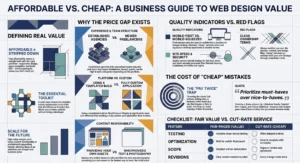
How to Tell an Affordable Web Design Service From a Cheap One
There’s a real difference between a service priced fairly and one priced low because corners were cut. Knowing which one you’re looking at saves you from an expensive redo later.
Ask what’s included in the quote. A fair-priced service will list design, development, mobile responsiveness, and a review round clearly. A cut-rate quote often skips testing, skips mobile optimization entirely, or reuses a generic template with no customization. The price might look similar on paper, but the final product rarely is.
Why the Price Gap Between Web Designers Is So Wide
Web design pricing varies for real reasons, not just because some companies charge more for the same work.
- Experience level. A newer freelancer charges less than an established team, though that doesn’t always mean lower quality.
- Platform choice. A templated build on a platform like WordPress or Shopify costs less than a fully custom application.
- Scope. A five-page site costs less than a ten-page site with booking forms or an online store.
- Support model. Some quotes include months of support after launch. Others charge separately for every update.
- Content responsibility. A quote that includes copywriting and photography costs more than one that assumes you’ll supply your own text and images.
None of these factors make one designer better than another by default. They just explain why two quotes for what looks like the same project can land thousands of dollars apart.
Understanding these factors helps you compare quotes accurately instead of just picking the lowest number and hoping for the best. If you run a small operation and want a sense of realistic pricing before you start shopping around, our breakdown of web design service for small business costs walks through typical ranges in more detail.
What to Look for When Comparing Web Design Quotes
A few specific things separate a genuinely good value from a site you’ll regret within a year.
- Fast load times. Slow websites lose visitors before the page even finishes loading. Testing your current or proposed site’s speed with a tool like Website performance checks gives you a clear, objective number instead of a guess.
- Mobile-first design. Most traffic now comes from phones, and Google prioritizes sites built with Mobile-friendly websites principles in mind, not desktop layouts squeezed onto a smaller screen.
- Basic security practices. Even a simple business site should follow fundamental protections. A designer who references standards like the Website security guidelines when handling forms or logins is thinking ahead, not just shipping something that looks finished.
- Clear ownership terms. Confirm you own your content, domain, and design files once the project wraps up.
- A written scope. Get exactly what’s included, and what isn’t, in writing before any work begins.
Common Mistakes That Cost More Later
A few avoidable mistakes turn a budget-friendly project into an expensive one.
- Choosing the lowest quote without asking what’s excluded
- Skipping mobile testing, which leads to a redesign within a year
- Assuming a cheap template will scale as your business grows
- Ignoring hosting and maintenance costs until something breaks
- Never asking who owns the code and content after launch
Most of these mistakes come from rushing the decision. A short conversation with your designer about each point usually prevents all five.
It also helps to think about your website the way you’d think about any other business investment. A slightly higher upfront cost that includes proper testing, mobile optimization, and a clear ownership agreement almost always works out cheaper than a low bid that needs to be redone within eighteen months.
Getting the Most Value From Your Budget
You don’t need every feature on day one. Prioritizing what matters most now, and adding the rest later, is how you get a genuinely affordable web design service without sacrificing quality.
Start with a clear, well-structured site that loads fast and works on mobile. Add e-commerce, booking tools, or advanced integrations once you know your business actually needs them. If you’re running an online store, purpose-built options like Shopify store development or Shopify Custom Theme Development often deliver better performance per dollar than a generic theme stretched to do more than it was built for.
Setting Priorities When Your Budget Is Limited
Not every business needs the same starting point. A local service business might only need a clean, fast homepage with contact information and a few service pages, while a growing e-commerce brand needs a functioning store from day one.
Before requesting quotes, list your must-haves separately from your nice-to-haves. A simple three-column list works well: what the site absolutely needs to launch, what would help but isn’t urgent, and what can wait until revenue picks up. Sharing this list with a designer upfront makes it far easier for them to build a quote that fits your actual budget instead of guessing at what you might want.
Frequently Asked Questions
How much should I expect to pay for a budget-friendly website?
Most small businesses can expect to pay between $1,500 and $6,000 for a professionally built site that covers the essentials. Costs rise with added features like e-commerce or custom booking systems.
Is a cheap website builder the same as a professional design service?
Not exactly. DIY builders are lower cost upfront but often lack the SEO structure, speed optimization, and mobile design a professional service provides from the start.
What should be included in an affordable website package?
A solid package should include responsive design, basic SEO setup, mobile optimization, and a short review period for revisions. Anything beyond that is usually billed as an add-on.
Will an affordable website still rank well on Google?
Yes, as long as it’s built with clean code, fast load times, and mobile-first design. Ranking depends more on structure and performance than on how much the site cost to build.
How do I avoid hidden costs with a budget web design service?
Ask for a written, itemized quote before work begins, and confirm what happens after launch. Hidden costs usually show up around hosting, revisions, and ongoing maintenance.
Final Thoughts
Finding the right affordable web design service comes down to understanding what you’re actually paying for, not just chasing the lowest number you can find. Focus on speed, mobile design, and a clear scope of work, and add advanced features only once your business is ready for them.
If you’d like a straightforward quote built around what your business actually needs, Contact Us and we’ll walk you through your options. You can also browse our Services page or check Our Latest Blog for more guidance on planning your next website project.