You’ve got three quotes sitting in your inbox. One says $800. Another says $6,000. A third wants $18,000 for what looks like the same five-page site. A web design service for small business can genuinely cost anywhere in that range, and the reason isn’t random. It comes down to what’s actually included in the price, not just the number on the invoice.
If you’ve felt confused trying to compare quotes, you’re not alone. Most business owners hit this exact wall the first time they shop for a website. Most small businesses pay between $2,000 and $15,000 for a professionally designed website. DIY builders run $200 to $1,600 a year. Freelancers typically charge $1,500 to $8,000 for a custom build. Full-service agencies range from $5,000 to $30,000 or more, depending on pages, features, and ongoing support.
Why the Price Range Is So Wide
A website isn’t one product. It’s a bundle of decisions, and each one adds or removes cost. A five-page brochure site with a template theme costs far less than a ten-page custom site with booking forms, a product catalog, or a client portal. The designer’s experience level matters too. A solo freelancer working nights and weekends will quote differently than an agency with a project manager, a developer, and a copywriter on staff.
Neither option is automatically better. A freelancer can be the right call for a simple local business site. An agency makes more sense when you need integrations, ongoing maintenance, or a site built to scale as you grow. You can see how Devstren approaches these builds on our services page.
What Actually Drives the Cost
Number of pages. More pages mean more layouts, more content, and more testing.
Custom design vs. templates. A themed WordPress or Shopify site is cheaper to launch. Fully custom design costs more upfront but usually performs better for branding and conversions.
Functionality. Booking calendars, e-commerce checkout, membership logins, and multi-language support all add development hours.
Content creation. Some quotes include copywriting and photography. Others assume you’ll supply everything yourself.
Platform. A Shopify store, a WordPress build, and a fully custom application aren’t priced the same way, since each has different setup and maintenance needs.
Ongoing support. Hosting, security updates, and small content changes after launch are usually billed separately unless you ask upfront.
Timeline pressure. A rush job that needs to launch in two weeks costs more than the same project spread over two months, since the designer has to reprioritize other clients to hit your deadline.
None of these factors are hidden on purpose. Most designers simply assume you already know which ones apply to your project, so it’s worth asking about each one directly during your first call.
Common Mistakes Business Owners Make
Most of the frustration around website pricing comes from a handful of avoidable mistakes.
- Comparing quotes without checking what’s actually included, like hosting, revisions, or copywriting
- Choosing the cheapest option without asking who owns the code and content afterward
- Skipping a written scope of work, then getting surprised by change-order fees
- Assuming a lower price means the same quality, when it often means fewer revisions or a recycled template
- Forgetting to budget for maintenance, which can add $50 to $200 a month after launch
Asking a designer to walk through their quote line by line usually clears up most of these issues before you sign anything.
What to Expect, Step by Step
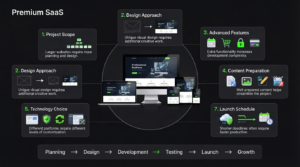
A typical project with a web design service for small business follows a predictable path.
- Discovery call. You talk through goals, audience, and must-have features.
- Proposal and scope. You get a written quote covering pages, timeline, and what happens after launch.
- Design phase. You review layouts and branding before any code is written.
- Development. The designer builds the site, tests it across devices, and checks accessibility basics like color contrast and keyboard navigation, following guidance similar to the W3C Web Accessibility Initiative standards.
- Review and revisions. You request changes within the agreed revision rounds.
- Launch. The site goes live, and analytics tracking gets connected so you can see how visitors use it, following setup steps like those in the Google Analytics Help Center.
- Handoff and support. You receive login access, documentation, and a plan for updates going forward.
Cost Breakdown by Option
| Option | Typical Cost | Best For |
| DIY builder | $200–$1,600/year | Testing an idea on a tight budget |
| Freelance designer | $1,500–$8,000 | Simple, custom sites for local businesses |
| Small agency | $4,000–$15,000 | Growth-focused sites with SEO and support |
| Full-service agency | $10,000–$30,000+ | Complex builds with e-commerce or integrations |
Benefits of Hiring a Professional
A well-built site pays for itself in ways a cheap template rarely can.
- Faster load times, which keep visitors from bouncing before the page even loads
- Mobile-first layouts that work correctly on phones, not just desktop monitors
- SEO fundamentals built in from day one instead of patched on later
- Code that follows current web standards, similar to the practices documented on Mozilla Developer Network
- A site you actually own, with no lock-in to a single platform
- Ongoing support from someone who already understands your site, instead of relearning it from scratch every time something breaks
These advantages compound over time. A site that loads fast and ranks well keeps earning you traffic long after the invoice is paid, while a cheap template often needs a full rebuild within a year or two.
If you’re running a Shopify store, a purpose-built approach like Shopify store development or a Shopify custom theme development project can outperform a stock theme in both speed and conversions. If you’re on WordPress instead, custom wordpress development gives you the same advantage without forcing you onto a generic template.
Frequently Asked Questions
How much should a small business budget for a new website? Most small businesses should budget $2,000 to $8,000 for a professional custom site, with e-commerce or booking features pushing costs toward the higher end of that range.
Is a cheap website builder good enough for a small business? DIY builders work fine for testing an idea, but they often fall short on SEO, load speed, and mobile design once your business depends on the site for leads.
How long does it take to design a small business website? A standard five to ten page site usually takes four to eight weeks from discovery call to launch, depending on revisions and how quickly content gets approved.
What’s included in a typical web design quote? Most quotes cover design, development, mobile responsiveness, and basic SEO setup, but hosting, copywriting, and photography are often billed as separate line items.
Do I need ongoing maintenance after my website launches? Yes. Security updates, backups, and small content edits typically cost $50 to $200 a month, and skipping them raises the risk of a slow or vulnerable site.
Bringing It All Together
The cost of a web design service for small business depends less on the number you’re quoted and more on what that number actually includes. A clear scope, honest conversation about your goals, and a designer who explains their pricing will save you more money long term than chasing the lowest bid.
If you’d like a straightforward quote built around your business rather than a generic package, get in touch with the Devstren team. You can also browse our latest blog for more guidance on planning your next website project.