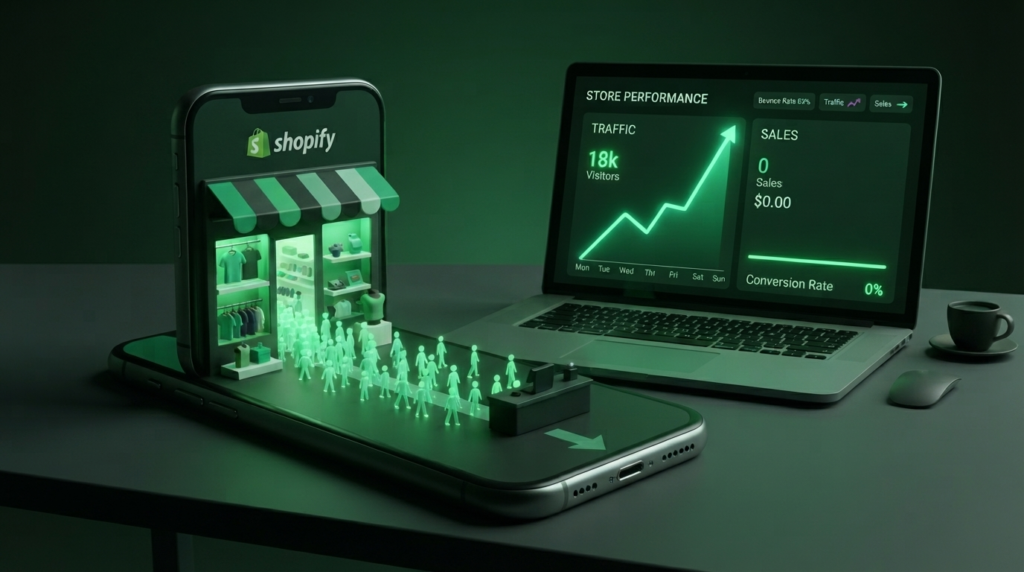
You have traffic coming to your store, but the sales are not showing up. You have spent money on ads, posted daily on social media, and still watch visitors leave without buying. This is exactly why so many store owners start searching for a shopify web development agency. A store that looks fine on the surface but converts poorly usually has structural problems that only proper development work can fix.
Traffic without conversions is a common frustration for online sellers. Before you hire anyone, it helps to understand what a proper scope of work should include. Devstren’s service pages break down what store development, CRO, and ongoing support typically cover.
Why Traffic Alone Does Not Guarantee Sales
Getting visitors to your store is only half the job. Conversion rate optimization, page speed, checkout flow, and mobile usability decide whether those visitors become buyers.
Common reasons stores struggle to convert include:
- Slow-loading product and collection pages
- Confusing navigation that hides key products
- Checkout steps that feel long or untrustworthy
- Poor mobile layout on a store built mainly for desktop
- Missing trust signals like reviews, policies, and clear shipping details
According to Baymard Institute research, average cart abandonment rates sit above 70 percent across ecommerce, and a large share of that loss comes from fixable usability issues rather than pricing or product quality.
What a Shopify Web Development Agency Actually Does
A genuine Shopify development partner does more than install a theme. Their work usually covers:
- Custom theme development and modification using Liquid, HTML, CSS, and JavaScript
- App integration for payments, shipping, inventory, and marketing tools
- Store migration from platforms like WooCommerce or Magento
- Speed optimization and Core Web Vitals fixes
- Conversion rate optimization based on real user behavior
- Ongoing maintenance, bug fixes, and feature updates
Google treats page experience as part of its ranking evaluation, and a store built without that in mind often struggles with both search visibility and conversions. You can read more about Devstren’s approach and team background on the About page.
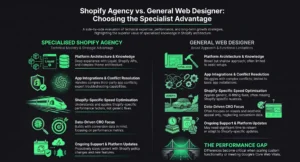
Difference Between a Shopify Agency and a General Web Designer
Store owners often confuse a general web designer with a specialized Shopify partner. The two are not the same, and the gap shows quickly once a store needs custom functionality. Google’s own Core Web Vitals documentation explains the loading, interactivity, and stability of benchmarking a properly built store should aim for.
| Factor | Specialized Shopify Agency | General Web Designer |
| Platform knowledge | Deep experience with Liquid, Shopify APIs, and theme architecture | Broad but shallow platform knowledge |
| App integrations | Handles complex third-party app conflicts | Often limited to basic setup |
| Speed optimization | Understands Shopify-specific performance factors | May apply generic fixes that do not fit Shopify |
| Ongoing support | Familiar with Shopify updates and policy changes | May need extra time to relearn the platform |
| CRO focus | Builds with conversion data in mind | Often focused on visuals only |
Key Factors to Evaluate Before Hiring
Picking the right Shopify web development agency comes down to checking a few concrete signals rather than trusting a sales pitch.
- Portfolio relevance. Look for stores similar in size or industry to yours, not just visually appealing examples.
- Pricing transparency. Ask whether quotes include revisions, app setup, and post-launch support.
- Communication style. A team that explains decisions in plain language is easier to work with in the long term.
- Reviews from real clients. Check out third-party platforms rather than only testimonials on the agency’s own site.
- Post-launch support terms. Confirm what happens after the store goes live and who fixes bugs.
Reading independent reviews on platforms like Clutch or Trustpilot gives you a clearer picture than marketing copy alone, since these reviews come directly from past clients.
Difference Between Custom Development and Template-Based Setup
Many agencies offer both options, and knowing the difference helps you set the right budget and timeline expectations. You can browse real examples of both approaches on the Devstren blog.
| Factor | Custom Shopify Development | Template-Based Setup |
| Design flexibility | Fully tailored to brand and user flow | Limited to theme structure |
| Timeline | Longer, typically several weeks | Faster, often days |
| Cost | Higher upfront investment | Lower initial cost |
| Scalability | Built to handle growth and custom features | May require rebuilding later |
| Best for | Brands with specific UX or CRO needs | New stores testing the market |
Shopify itself outlines how subscription and feature tiers scale with store needs. Reviewing the Shopify pricing overview before your project starts helps you separate platform costs from agency development costs.
Signs of a Reliable Agency
A dependable Shopify partner usually shows these patterns early in the conversation:
- They ask about your business goals before recommending features
- They give realistic timelines instead of promising overnight results
- They explain technical decisions in terms you can understand
- They offer a clear scope of work in writing
- They do not pressure you into signing immediately
If an agency avoids questions about past projects or refuses to share references, treat that as a warning sign rather than a minor detail. The official Shopify Partner Directory is a useful place to cross-check an agency’s standing and verified client reviews.
Common Mistakes Store Owners Make
Avoiding a few predictable mistakes saves time and budget:
- Choosing the cheapest quote without checking what is excluded
- Skipping a technical audit of the existing store before development starts
- Ignoring mobile performance during the review process
- Assuming a nice-looking design automatically improves conversions
- Not asking who owns the code and files after project completion
Getting these details clear in writing before the project starts prevents most of the disputes that come up later.
How Devstren Approaches Shopify Projects
Devstren works with store owners who are frustrated by traffic that does not convert. The team reviews the existing store, identifies friction points in navigation and checkout, and builds fixes around actual user behavior rather than guesswork. If your store fits this pattern, you can reach the team directly through the contact page.
Frequently Asked Questions
Q: What is a shopify web development agency?
A: It is a specialized team that builds, customizes, and maintains online stores on the Shopify platform. Their work usually covers theme development, app integration, speed fixes, checkout tweaks, and ongoing store support after launch.
Q: How does a Shopify agency improve conversion rates?
A: Agencies review checkout flow, page speed, mobile layout, and navigation to find friction points. They adjust these elements based on user behavior data rather than guesswork, which often improves how many visitors complete a purchase.
Q: Why should I hire an agency instead of building my store myself?
A: An experienced team can spot technical and usability issues that are easy to miss without a development background. This often saves time and prevents costly mistakes during migration, app integration, or custom feature setup on your store.
Q: How long does a typical Shopify development project take?
A: Timelines vary based on scope and complexity. A template-based setup may take a few days, while custom development with integrations and thorough testing can take several weeks. Ask for a written timeline before the project officially begins.
Q: What should I expect during the first consultation call?
A: A reliable agency asks about your business goals, current store performance, and budget before suggesting solutions. They should explain their process clearly, share realistic next steps, and avoid pushing you toward an immediate decision.
Q: Do you offer support after the store goes live?
A: Most established agencies include some post-launch support, though the terms vary widely from one team to another. Always confirm what is covered, for how long, and what counts as a billable request before signing any written agreement.
Q: Can I switch agencies partway through a Shopify project?
A: Yes, though it depends on code ownership and documentation quality. Ask upfront who owns the theme of files, apps, and store access, since clear ownership from the very start makes any future agency transition much smoother overall.
Q: How do I choose between a freelancer and a full agency?
A: Freelancers can work well for small, clearly defined tasks, while agencies typically offer broader coverage across design, development, and support. Match your choice to project size and how much ongoing help you expect to need later.
Final Thoughts
Choosing a shopify web development agency does not need to feel like guesswork. Focus on real portfolio work, transparent pricing, and clear communication rather than promises of instant results. Ask direct questions about timelines, support, and code ownership before you sign anything.
If your store already has traffic, but the sales are not following, the problem is often fixable through better structure, speed, and checkout design rather than more ads to spend. A team that understands both Shopify’s technical side and everyday shopping behavior can turn existing visitors into paying customers without you starting from zero.